

Military & Defense
The Department of Defense tracks thousands of heat casualties annually. Despite decades of prevention protocols, service members continue to suffer serious heat illness during training and operations - and in the worst cases, die.
The problem isn't lack of awareness. It's lack of visibility.
Drill instructors can't see when recruits are approaching heat stroke.
Battalion commanders don't know which platoons are accumulating heat faster during multi-day field exercises.
Deployed unit leaders conducting operations in extreme heat have no real-time data on squad-level thermal status.
Heat casualties impact unit readiness: medical evacuations delay training pipelines, reduce operational strength in theater, and trigger Congressional scrutiny. Current protocols rely on environmental monitoring and scheduled work-rest cycles that treat all personnel identically - but two service members in identical conditions can have vastly different thermal stress. Ambient temperature doesn't predict individual risk.
Military-Specific Challenges
Basic Training
Basic training exposes recruits to progressive heat stress before they've developed acclimatization.
Combat Training Centers
Combat training centers involve multi-day field exercises in extreme conditions where units accumulate thermal stress without full recovery.
Special Operations Selection
Special operations selection courses compound heat stress with sleep deprivation and caloric restriction, making it impossible to distinguish acceptable training stress from dangerous thermal accumulation without physiological data.
Deployed Operations
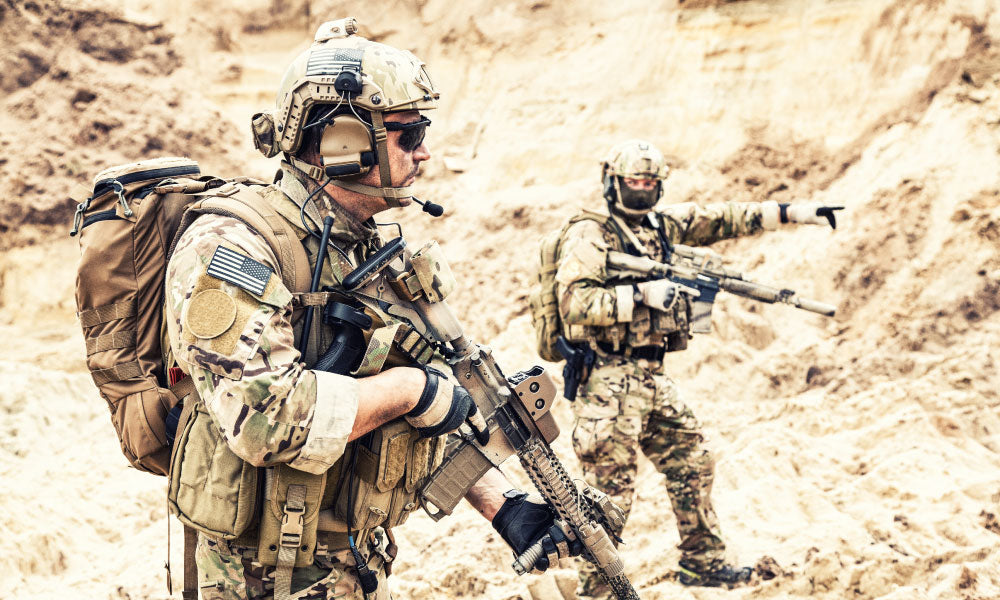
Deployed forces in Iraq, Afghanistan, and other high-heat theaters conduct operations carrying 60-100+ pounds of combat equipment in temperatures exceeding 120°F. Body armor and gear trap metabolic heat while restricting ventilation. The gap between garrison capacity and deployed performance is often determined by heat management, not fitness or tactical proficiency.
Use Cases
Basic Training Heat Monitoring
Drill sergeants monitor recruit thermal load during physical training and field exercises. Identify individuals needing modified progression or additional acclimatization time. Prevents heat casualties that delay training completion and provides objective data replacing subjective assessment of who's struggling versus managing heat stress effectively.
Special Operations Selection and Training
Cadre distinguish between candidates managing cumulative stress effectively versus those approaching dangerous thermal thresholds despite maintaining performance. Optimizes selection rigor while preventing medical emergencies during elite programs.
Combat Training Center Rotations
Battalion commanders track unit thermal load during multi-day exercises. Identify when units need extended recovery or modified tempo based on actual physiological data. Maintains training intensity while preventing casualties that would disrupt exercise objectives.
Operational Deployments
Unit commanders monitor squad thermal load during patrol operations, convoy security, and extended missions. Identify when personnel are approaching heat exhaustion before it compromises mission effectiveness or forces medical evacuation. Critical for dismounted infantry and special operations conducting operations with heavy equipment loads in extreme heat. Maintains operational tempo while preventing casualties that reduce combat power in theater.
The Defense Readiness Case
Prevent Casualties and Maintain Combat Power
Heat-related training deaths create Congressional scrutiny and institutional consequences. Serious heat casualties cost hundreds of thousands in medical treatment and disability claims. In deployed units, heat casualties reduce available personnel and compromise mission effectiveness. Prevention protects service members and readiness.
Optimize Training and Operational Performance
Thermal load data allows training cadre to push intensity to the point that builds capacity without crossing into dangerous accumulation. In operations, commanders maintain mission tempo while avoiding casualties. Maximizes training stimulus and operational capability safely.
Data-Driven Policy Development
Aggregate thermal data across installations, deployed units, and populations informs evidence-based prevention policy. Replaces estimates with real-time physiological monitoring that adapts to changing conditions and operational realities.

Deployment for Military Organizations
Pilot programs run 90-180 days encompassing training cycles, seasonal variation, and operational contexts.
We prioritize:
- Training installations with heat casualty challenges
- Special operations commands seeking performance optimization
- Combat training centers requiring multi-day exercise heat management
- Deploying units preparing for high-heat environments
- Medical and human performance research commands
Deployment includes base layer integration with PT and combat uniforms, leadership dashboard access, protocol development for existing prevention programs, and data analysis consultation.
Procurement through SBIR programs, service medical/readiness budgets, installation safety funding, or operational requirements funding.